Book Appointment Now
Dietary modulation of inflammation
In the previous episode, We’ve talked about inflammation on a cellular level.
If you haven’t read it yet, you’ll surely find it interesting! But now, we jump to a more handy field, the field of actual “anti-inflammatory foods”.
Why is extra virgin olive oil so often the superstar?
We need to get to know “resolvins”.
Resolvins remove excess white blood cells and debris from the site of inflammation, therefore clean up the excess debris.
They literally solve the problem, as the English word “resolve” suggests.
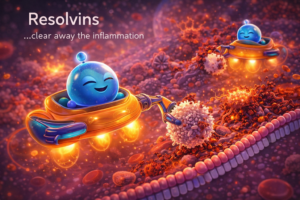
And these little hero-workers are built up from Omega3.
If there is not enough base material (“good fat” or omega-3) in our diet, the body starts inflammation, but cannot “turn it off” because the inhibitory molecules are missing. That is why “chronic inflammation” persists.
Resolvin is produced from Omega-3 fatty acids (mainly EPA and DHA)
Omega-3 fatty acids are built into the cell membrane (cell wall).
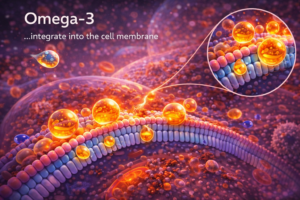
When inflammation reaches its peak, an enzyme (Phospholipase A2) “bites” the Omega-3 molecules out of the cell wall, then the well-known Cox-2 and the newly-known Lox enzyme work on it, turning it into resolvin.
The finished resolvin leaves the cell and binds to specific receptors on neighboring immune cells (e.g. macrophages and neutrophils).
The “STOP” signal: Stops the recruitment of more white blood cells
The “Cleanup”: This is the most visible part. Resolvin tells macrophages to eat dead cells and inflammatory debris.
The “Homecoming”: Tells immune cells at the site of inflammation to migrate back home to the lymph nodes.
Important: If your diet is rich in olive oil and fish, your cell walls are full of this “good” material. If you only eat sunflower oil, an inflammatory ingredient (arachidonic acid) will be released.
In summary:
Omega-3 is released from the membrane. Enzymes convert it into Resolvin. Resolvin, as a super-cytokine (or anti-cytokine), stops the fighting and starts the cleaning. Vitamin C and Selenium even protect the machinery during production.
Our next character: “Oleokantal”. If you have ever tasted raw extra virgin olive oil, you know its strangely pungent taste. This is thanks to Oleokantal, or “Oli” to friends. Beauchamp and his colleagues made it famous in 2005. Oli, like ibuprofen, inhibits the Cox enzymes involved in inflammatory processes (it sits inside, clogs them and prevents them from producing inflammatory messengers).
If these enzymes are inhibited, they do not send out the prostaglandins and cytokines mentioned in the other article, meaning that the inflammation will not be experienced as intensely by the individual.
But we have to be careful, Oli is heat sensitive. So if you fry in Olive Oil, it will break down. That doesn’t mean that olive oil isn’t still super healthy, but this polyphenol won’t be in it.
In one experiment, 16% of it broke down when olive oil was kept at 240 °C for 4 hours. (which is not so terrible after all)
But olive oil also contains “Hydroxytyrosols”.
They, along with Olive, are Polyphenols.
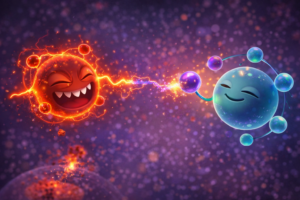
These polyphenols are able to penetrate directly into the fatty layers of the cell membrane and into the cytoplasm. Here they lurk on free radicals and give them their electrons before they can damage the cell’s DNA or mitochondria. Just how antioxidants do, but in advance.
There are other vitamins in olive oil, too!
For example: Vitamin E. Which works in several ways.
It blocks the pathway of inflammation, so the message doesn’t even reach the cell, or it distributes electrons as an antioxidant.
Or even vitamin K, which plays an important role in chronic inflammation (you may have heard this on the internet, the kind that lasts for a long time, even years), but we’ll talk more about that in another article.
So in omega 3, polyphenols, vitamins, and fatty acids work together to provide an anti-inflammatory effect.
Leafy Greens
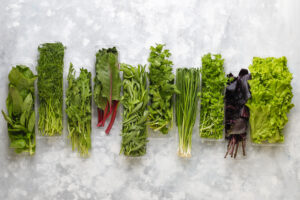
Leafy greens are full of flavonoids or beta-carotene.
They also neutralize free radicals in the body, donating electrons to them, thus calming them down.
As we saw with vitamin C, these molecules also have extra electrons. When they encounter an unstable, “hungry” free radical, they give it an electron.
This calms the free radical down (it becomes stable) and it no longer wants to eat away at the cell wall or DNA.
The structure of flavonoids is such that they are able to trap free iron and copper ions. Since these metals are needed to “produce” free radicals, flavonoids effectively block the source of inflammation.
You’ve probably heard about Magnesium before.
The abundant magnesium in spinach and kale physically sits on the NMDA receptors of nerve cells. This means that when Nitric Oxide gas comes in (Nitric Oxide, as we mentioned earlier, is a gas that makes nerve cells more sensitive, meaning you feel pain more) Because the magnesium has blocked the path, Nitric Oxide (NO) gas can’t amplify the pain signal.
Fiber!
They deserve their own mass.
I write about gut bacteria, the microbiome, in another article.
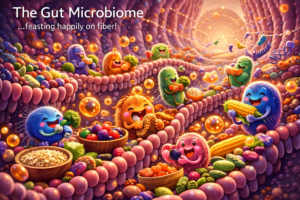
What is worth knowing is that the little gut bacteria work wonders in your body, and one of their favorite foods to feed them is fiber.
Foods that are high in fiber.
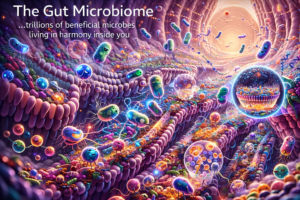
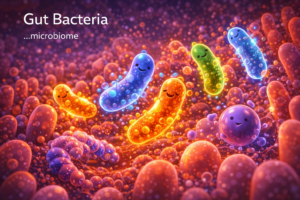
The gut bacteria convert the fiber into so-called “short-chain fatty acids” or “SCFAs” for short.
And that’s where the magic lies.
Among other good things, these fatty acids bind to the cells in the gut wall and trigger the production of IL-10 (an anti-inflammatory cytokine). This message travels through the bloodstream throughout the body, giving the immune system a “calm” command.
They are worth mentioning:
- Acetate: It intervenes in the reduction of inflammation in several ways.
- Propionate: Helps regulate insulin levels and thus has a positive effect on blood sugar levels.
- Butyrate: Has a neuroprotective and anti-inflammatory effect.
All these fatty acids nourish the intestinal epithelial cells.
In this way, they promote their growth and regeneration, thus strengthening the intestinal wall.
For example, butyrate is also widely consumed as a dietary supplement.
-
For constipation, bloating, irritable bowel syndrome (IBS).
-
In the diet for inflammatory bowel diseases.
-
As a supplement to a low-fiber diet.
-
To maintain healthy bowel function and balance of intestinal flora.
But you must consult a doctor first!
Let’s take broccoli for a different process!
The “glucosinolates” in broccoli changes into “sulforaphane” when chewed.

Sulforaphane “penetrates” the cell and tears off a protective protein called “Nrf2”. The released Nrf2 does its job and swims into the nucleus, simultaneously turning on more than 200 genes that produce the body’s own (internal) antioxidants and detoxifying enzymes.
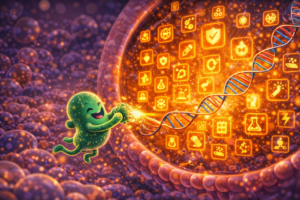
Nrf2 also turns on the genes responsible for the production of “glutathione.”
Glutathione attaches itself to toxins or free radicals and immediately gives them an electron. It can then be regenerated. This means that a single glutathione molecule can be used thousands of times, unlike vitamin C, which is depleted more quickly.
Nrf2 also activates genes such as “sulfotransferases.” These enzymes chemically make carcinogens or drug residues water-soluble, making them no longer harmful.
Let’s move on to other vegetables
The substances in tomatoes (lycopene) and sweet potatoes (beta-carotene) are fat-soluble…
Which means that they also integrate into the cell wall, similar to omega-3, and there they provide protection against free radicals. As if the building material of the castle wall were already attacking the enemy army, invaders.
Lycopene and beta-carotene play a key role in the prevention of “leaky gut”. Those who have researched digestive system diseases have heard this a lot.
“Leaky gut syndrome” is the cause of a lot of inflammation.
Normally, the cells of the intestinal wall hug each other tightly, so they do not let any substances out of the intestine that do not belong in the body.
But when these embraces loosen, bacteria, toxins, and undigested food particles from the intestines pass through the tiny gaps into the bloodstream and trigger the body’s defense system as foreign substances.
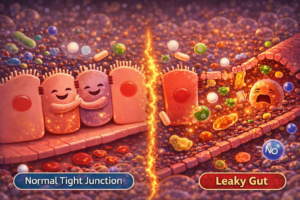
While free radicals try to weaken the bonds between cells, lycopene and beta-carotene help to strengthen these bonds by neutralizing free radicals.
The “betalains” in beets inhibit the gene expression of the enzyme iNOS. This is the enzyme that produces excessive amounts of nitric oxide at sites of inflammation, thus increasing the sensation of pain in nerve cells.
Berries
We mentioned earlier how the message gets from the cell receptor to the nucleus.
The green arrow could be any path.
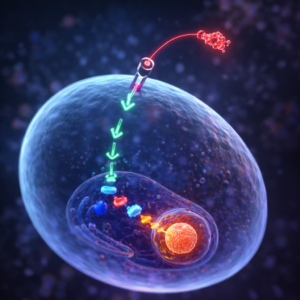
There is a path called “MAPK” .. avoid this path if you don’t want trouble.
MAPK pathways respond to environmental stress, cytokines or damage, regulating the stress response or initiating programmed cell death (apoptosis).
(They have other tasks to do but this is what’s important to us now)
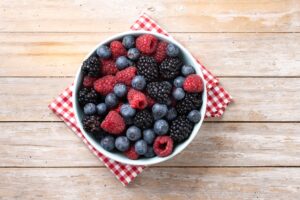
Berries contain “Anthocyanins” they simply block this path, the stressful message doesn’t get to the nucleus, so it doesn’t generate an inflammatory response, so this misery doesn’t even start.
Anthocyanins also reduce the concentration of nitric oxide in the tissues, which as we already know reduces the sensitivity of pain receptors, and even vasodilation and edema.
These fruits are full of “polyphenols” which is a great character!! We still have a lot to talk about!
They can do the same thing as the anthocyanins mentioned above, only they inhibit a different pathway called “JAK/STAT”. But the end result is the same, no unnecessarily hysterical immune response.
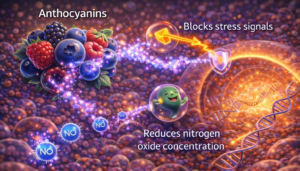
“Polyphenols”, like “sulforaphane”, activate the Nrf2 pathway and thereby increase the cell’s internal (endogenous) defenses.
The fibers and polyphenols of berries are also good nutrients for intestinal bacteria.
They are transformed (metabolized) in the colon (e.g. into phenolic acids).
The process takes place in the colon: intestinal bacteria (e.g. Bifidobacterium) produce specific esterase enzymes. These enzymes cleave the polyphenols bound to them from the fiber (e.g. hemicellulose) skeleton and convert them into phenolic acids (e.g. ferulic acid, caffeic acid), which can then be absorbed into the bloodstream.
And they also strengthen the connection between the epithelial cells just mentioned, thus being effective in preventing leaky gut syndrome. These connections are called “tight junctions”
Foods for leaky gut or gluten sensitivity
-
If the intestinal wall is damaged, fiber sources that are low in lectins and do not mechanically irritate the mucosa (lower FODMAP/irritation) are needed:
-
Pectin sources: Stewed apples, quince, carrots (cooked).
-
Resident starches (chilled): Cooked and then cooled potatoes or sweet potatoes.
-
Soluble fibers (calming): Psyllium husks, chia seeds (soaked), flaxseed flakes.
-
Vegetables: Pumpkin, zucchini (without skin), parsnips, beets.
-
Grain substitutes (gluten-free): Buckwheat, millet, quinoa (thoroughly rinsed/soaked due to saponins).
-
Berries: Blueberries, raspberries (blended or pureed if seeds are a problem).
These foods provide the raw materials needed for butyrate and phenolic acid production without gluten or coarse fibers further damaging the tight junctions between intestinal epithelial cells.
Nuts
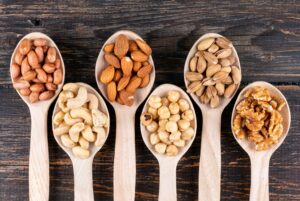
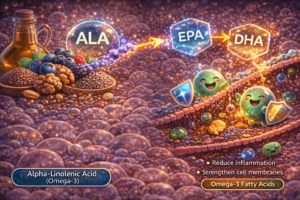
Flaxseed, Chia seed, and nuts also contain important fatty acids, which will be our “ALA”
ALA (alpha-linolenic acid) is a plant-based omega-3, while EPA and DHA are marine (fatty fish, algae oil).
However, this ALA cannot be absorbed as effectively as the beneficial fats found in fish.
Therefore, the body uses enzymes to convert it into EPA and DHA (although with limited efficiency), which are the materials for anti-inflammatory resolvins and protectins.
They inhibit the pathways that transmit inflammatory messages, and incorporate them into the cell wall, therefore strengthening it.
Seeds (especially pumpkin seeds and almonds) contain a large amount of the so-called “L-arginine amino acid”.
But what is it?
This amino acid (this word must have been heard by anyone who is interested in training)
Plays quite well with cytokines.
It can reduce the level of pro-inflammatory cytokines, let’s call them by their names: (e.g. IL-6, TNF-α, IFN-γ), while increasing the production of anti-inflammatory cytokines (e.g. IL-10). (We have already talked about them in detail).
L-arginine is the only component of nitric oxide (NO).
The role of NO is complex: On the one hand, it improves blood flow, dilates blood vessels, which helps nutrients and immune cells reach the inflamed area. (E.g. alcohol narrows them, therefore blocking nutrients from your organs)
In addition, it helps maintain the health of the entire vascular wall.
Nuts also contain selenium, zinc, and magnesium, which are also involved in these processes, which I will detail in another article.
Whole grain cereal
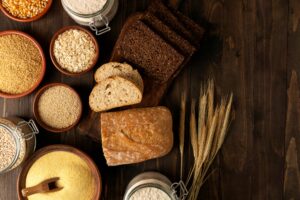
Here we must return to the beneficial role of fiber in the intestinal flora.
From the fibers (e.g. beta-glucan in oats, resistant starch in beans) the intestinal flora produces short-chain fatty acids. (see above) “SCFAs”
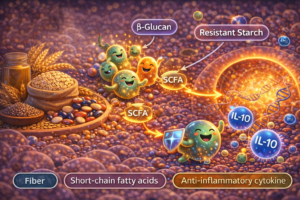
They talk to the nucleus through a complicated process to copy the cells that are responsible for producing the anti-inflammatory cytokine IL-10, and they spread throughout the body.
Another very important piece of information for our everyday lives is that the fiber in whole grains slows down the absorption of sugar, so there is no sudden insulin spike.
But how does this lead to inflammation?
The body can’t deal with the sudden large amount of sugar, it can’t immediately convert it all into energy, like putting more gas into the car than fits.
That’s why the body is asking for help.
The sudden spike in insulin and blood sugar activates the so-called “NADPH oxidase” enzyme in the cell, which produces a large amount of free radicals!
Of course, it is not their job to directly harm us, free radicals not only attack our own cells, but also bad bacteria.
White blood cells (phagocytes) use this “NADPH oxidase” enzyme to produce toxic oxygen radicals to destroy bacteria and fungi. But free radicals are not really selective, they are like pirates, they steal electrons from everyone, thus damaging everyone.
BUT!
Since the blood sugar level remains stable due to the fiber, this oxidative shock does not occur, there will be no inflammation.
Fiber.. The butyrate produced from fiber heals, nourishes, and feeds the intestinal epithelial cells.
The intestinal epithelial cells get 70-90% of their energy not from sugar coming from the blood, but from the butyrate in the intestinal cavity. A healthy, non-inflamed intestinal wall absorbs vitamins orders of magnitude more efficiently than a permeable or inflamed intestinal surface, of course.
Another important ingredient..
Legumes (beans, lentils) are rich in “phytosterols”, which are structurally similar to cholesterol. You have probably heard of cholesterol, its elevated levels are not uncommon.
At the cellular level: This very good phytosterol and cholesterol are incorporated into cell membranes and compete for absorption.
The more phytosterols there are, the more they are incorporated and stabilize the wall.
In the following article, we will explain which foods increase the chances of getting into a state of chronic inflammation.
You can read a similar post of mine with less biology in a more digestible, practical form.
Sources:
- www.nature.com (Butyrate, HDAC inhibition and IL-10)
- pubmed.ncbi.nlm.nih.gov (Microbial metabolites and immune regulation)
- www.ncbi.nlm.nih.gov (Leaky gut and systemic inflammation)
- pubmed.ncbi.nlm.nih.gov (Whole grains and inflammatory markers)
- www.cell.com (Fibre, microbiota and gut barrier)
- pubmed.ncbi.nlm.nih.gov (SCFA and G-protein coupled receptors)
- www.nature.com (Oleocanthal: ibuprofen-like activity in olive oil)
- pubmed.ncbi.nlm.nih.gov (Hydroxytyrosol and oxidative stress)
- www.ncbi.nlm.nih.gov (Olive oil polyphenols and TLR4 inhibition)
- pubmed.ncbi.nlm.nih.gov (Oleic acid and CRP levels)
- www.mdpi.com (Anti-inflammatory properties of Oleacein)
- pubmed.ncbi.nlm.nih.gov (Zinc and immune function)
- pubmed.ncbi.nlm.nih.gov (Selenium and Glutathione Peroxidase activity)
- www.ncbi.nlm.nih.gov (Magnesium and inflammation)
- pubmed.ncbi.nlm.nih.gov (Anthocyanins and MAPK pathway)
- www.ncbi.nlm.nih.gov (Sulforaphane and Nrf2 induction)
- pubmed.ncbi.nlm.nih.gov (TMAO and cardiovascular risk)
- www.healthline.com (General overview of anti-inflammatory foods)