Book Appointment Now

Vitamin A on a cellular level
Vitamin A has many functions, including acting as a guide, helping cells understand what they need to become and how the body needs to rebuild and protect itself.
Vitamin A is not just a “nutrient”, but actually a hormone-like molecule that directly influences the functioning of the human genome.
This is an important cell biological function of vitamin A. Stem cells do not yet know what they want to be, but it affects the cell. (e.g. skin tissue, mucous membrane or immune cell). Without the vitamin, cells would divide uncontrollably and would not be able to perform their specialized tasks.
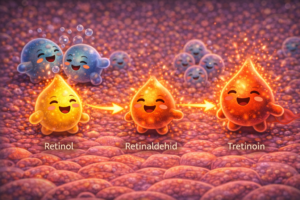
Vitamin A (retinol) arriving in the bloodstream enters the cell, where it binds to specific proteins. Inside the cell, retinol is converted into retinoic acid. This is the most important step: retinoic acid (also known as tretinoin) is the “master key” that can enter the cell nucleus.
THE EFFECTS OF VITAMIN A
Contributes to maintaining normal vision, retinal health
To understand how vitamin A contributes to vision, we first need to understand what vision is..
So we will explain it now! If you are interested in the end result, feel free to scroll down for the effects of vitamin A.
Vision begins with visible light.
So with the photon.

Photons are the smallest possible units of light. Photons can travel at the speed of light because they have no mass.
Visible light (in the form of photons) passes through the cornea and pupil, and is then focused by the lens onto the retina, the back wall of the eye.
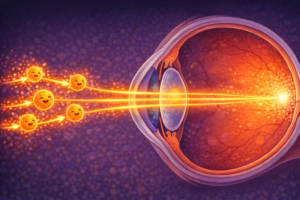
In the photoreceptor cells (rods) of the retina, a protein called rhodopsin is waiting. In the middle of this sits a form of vitamin A, 11-cis-retinal.
When a light particle (photon) hits this complex, (a tight unit of the protein (opsin) and the 11-cis-retinal (vitamin A derivative) inside it) it transfers its energy, turning the protein on, which sets off a domino effect in the cell. This is phototransduction.

The opsin comes –> and the Sodium channels on the cell walls (which allow positive charge in) close. The cell becomes negatively charged, which stops the release of neurotransmitters (namely glutamate), and as a result, the message to the brain starts.. “We saw light!”
The “used” vitamin molecule exits the rod cell into the neighboring retinal pigment epithelium (RPE). Here, with the help of special enzymes (such as RPE65), the body converts the molecule back to its original (11-cis) state, and the “recharged” molecule then migrates back into the rod cell to be reassembled into rhodopsin.

So..
when exposed to light, vitamin A is transformed (straightened), sodium channels close, and glutamate (the inhibitory substance) production stops.
Then..
The cell passes the signal on to the ganglion cells.
These cells then initiate actual electrical discharges (action potentials).
The “cable”: The long extensions (axons) of the ganglion cells intertwine and form the optic nerve. This “thick cable” carries the signal from the eyeball back to the brain.
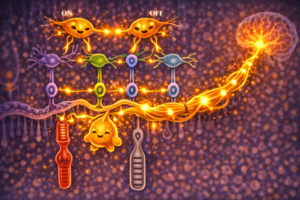
The signal first travels to the thalamus, located in the center of your brain.
Its function: It acts as a filter and distributor. It decides what is important (like a ball flying towards you) and what is background noise.
The signals eventually reach the primary visual cortex, located at the very back of your brain.
There are specialized groups of cells here. One group only monitors the angle of the lines, another group monitors colors, and a third group monitors movement.
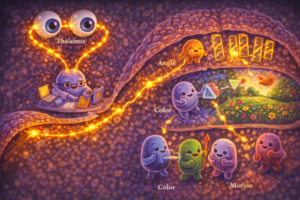
The brain’s job: Your brain “kneades” these separate pieces of information (line, color, movement, depth) into a single unified experience at lightning speed.
So: The change in the shape of vitamin A sets off the dominoes, the end of which is that you recognize: “This is an apple.”
If there is enough vitamin A, the “vision cycle” works smoothly. If there is not enough, the process gets stuck at the cellular level.
It’s like there is no ingredient for the cookie.
When there is little vitamin A, your eyes cannot “recharge” quickly enough. Even though your pupil dilates, the receptors do not respond, so you cannot see anything in the dim light. (E.g. night blindness)
Vitamin A is not only necessary for vision, but also for the survival of the cell.
If the cycle is disrupted, the “used” retinoids cannot be removed and form toxic deposits (e.g. lipofuscin) in the cells of the retina.
This “cellular garbage” damages the retina and can lead to the destruction of visual cells in the long term.
Vitamins C, E, carotenoids, flavonoids, selenium, omega 3 and other nutritional supplements are also often consumed to contribute to vision, but I will talk about these in other articles 🙂
Vitamin A has many other effects on the eyes through its gene expression capabilities.
- It activates the cells responsible for moistening the eye.
- It instructs the cells of the eye surface to stay soft and juicy.
- It regulates the enzymes that build the connective tissue of the cornea.
- It helps control inflammatory processes in the cells of the retina, thus protecting the place of sharp vision (the macula) from oxidative stress.
Vitamin A is your eye’s fuel (vision), lubricant (moisture), and armor (transparent cornea).
It contributes to the maintenance of the normal condition of mucous membranes and skin.
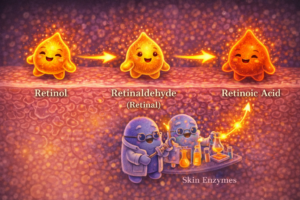
When retinol enters the skin, it is converted into active retinoic acid (tretinoin) in a two-step enzymatic process, which exerts anti-wrinkle and skin-renewing effects.
When used as a cream…
Skin cells first convert the applied retinol into retinaldehyde (retinal).
Retinaldehyde is further converted into the active form, retinoic acid, which is usable by the skin.
Enzymes in the skin do this work, which ensures the gradual release of the active ingredient
Acceleration of Epithelial Cells (Keratinocytes)
In the top layer of the skin, cells are constantly dividing and migrating upwards. This process takes about 28 days in young people, and slows down in older people.
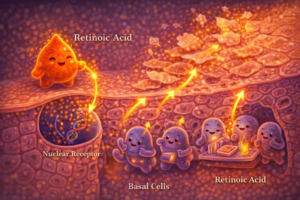
Retinoic acid attaches to the receptors in the cell nucleus and instructs the basal (lower) cells to divide faster.
This way, old, damaged cells are shed faster, the skin surface becomes smoother, and the pores cannot become clogged (therefore effective against acne).
Starting the “Collagen Factory” (Fibroblasts)
The fibroblast cells in the deeper dermis layer are responsible for the elasticity of the skin.
Retinoic acid activates the genes responsible for collagen production. At the same time, it blocks the function of the enzyme called collagenase, which would break down the existing collagen (for example, under the influence of UV radiation).
The result is a thicker, more elastic dermis layer, reduced fine lines and wrinkles.
Regulation of Pigment Production (Melanocytes)
Pigment spots are caused by overactive melanocyte cells.
Retinoic acid regulates the distribution of melanin. It prevents pigments from clumping together in the skin cells.
Result: More even skin tone, fading sun spots and post-inflammatory scars.
Water retention and GAG synthesis
The amount of hydrating substances (e.g. glycosaminoglycans or hyaluronic acid) found in the space between cells also depends on the effect of vitamin A.
Glycosaminoglycans: components of the structure of connective tissues, cartilage and synovial fluid.
Hyaluronic acid: found in the body’s connective tissues, joints and skin. It has an outstanding water-binding capacity, and thanks to its gel-like consistency, it hydrates and makes the skin elastic – It can bind up to 1000 times its own weight in water, which is the basis of hydration.
This is the miracle substance that gets the main role in every moisturizing cream advertisement.
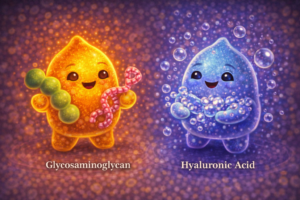
Retinoic acid stimulates the production of these molecules, which attract water to the skin like a magnet.
The result is fuller, hydrated skin.
It is involved in normal iron metabolism.
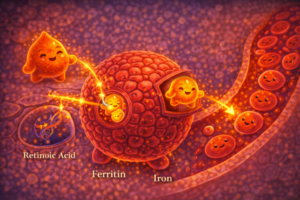
Most iron is stored in the liver in a protein called ferritin. In order for iron to get to where it is needed (for example, in red blood cells), it must be released from storage.
Vitamin A (retinoic acid) activates genes that “release” iron from cells into the bloodstream. If you don’t have enough vitamin A, iron gets “stuck” in the stores, and even though there is plenty of it in your body, your cells “starve.”
Iron cannot circulate freely in the blood (because it would be toxic), it needs a transport protein called transferrin.
Vitamin A directly tells liver cells to produce more transferrin. This protein is the “truck” that picks up iron and transports it to the bone marrow.
Bone Growth
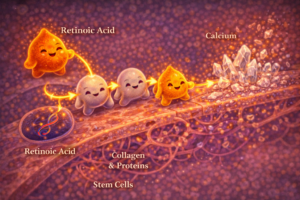
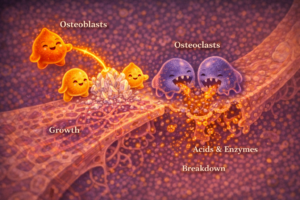
Vitamin A (retinol) tells stem cells to develop into osteoblasts (bone-building cells). These cells begin to secrete bone matrix (collagen and proteins), onto which calcium is then deposited.
Bone growth requires not only building, but also breaking down. Think about it: when a tube gets thicker, its interior also needs to expand so that it is not too heavy and has room for the bone marrow.
Vitamin A also stimulates the maturation of osteoclasts (bone-eating cells). These cells release acids and enzymes that “dissolve” old or unnecessary bone tissue
 .
.
Vitamin A ensures that the rate of breakdown and construction is in harmony (this is called remodeling).
In case of vitamin A deficiency, the bone breakdown process slows down, the bones become too thick, dense, but weak and deformed. For example, overgrowth of skull bones can suppress the cranial nerves (causing hearing or vision loss).
In case of vitamin A overdose, the “demolition workers” (osteoclasts) become too active. They eat away too much bone, which leads to osteoporosis and easier fractures.
Antioxidant effect, immune booster
This is primarily due to beta-carotene (the provitamin).
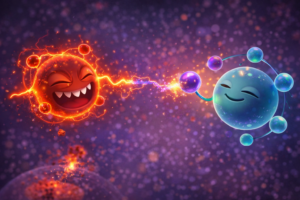
Beta-carotene sits in the fatty layer of the cell membrane and, like a lightning rod, absorbs and neutralizes free radicals before they can damage the cell structure. (Free radicals are molecules that have an unpaired electron, so they go and steal it from other cells, thereby damaging them. I will explain its role in inflammation in detail in another article.)
By doing this, beta-carotene protects the cell.
Regarding the immune system, the retinoic acid mentioned at the beginning of our story gives the order to the T-cells where to migrate (e.g. to the intestinal tract) and how to destroy infected cells there. It regulates the immune response so that it is not too weak (infection) but not too strong (autoimmunity).
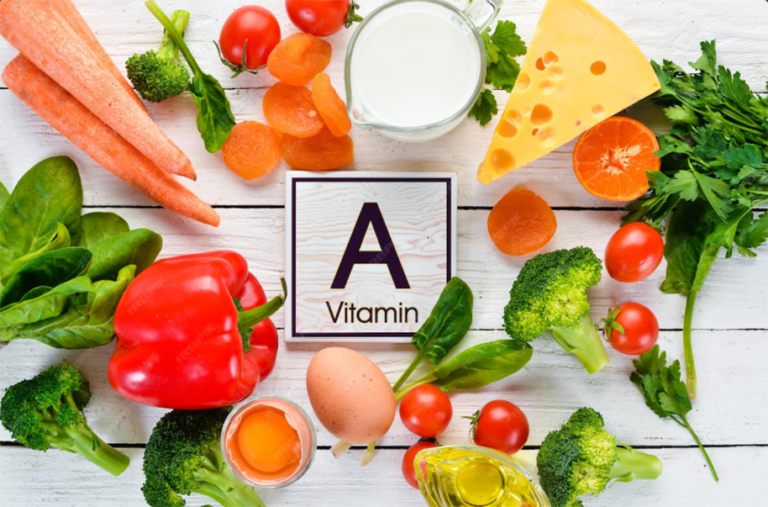
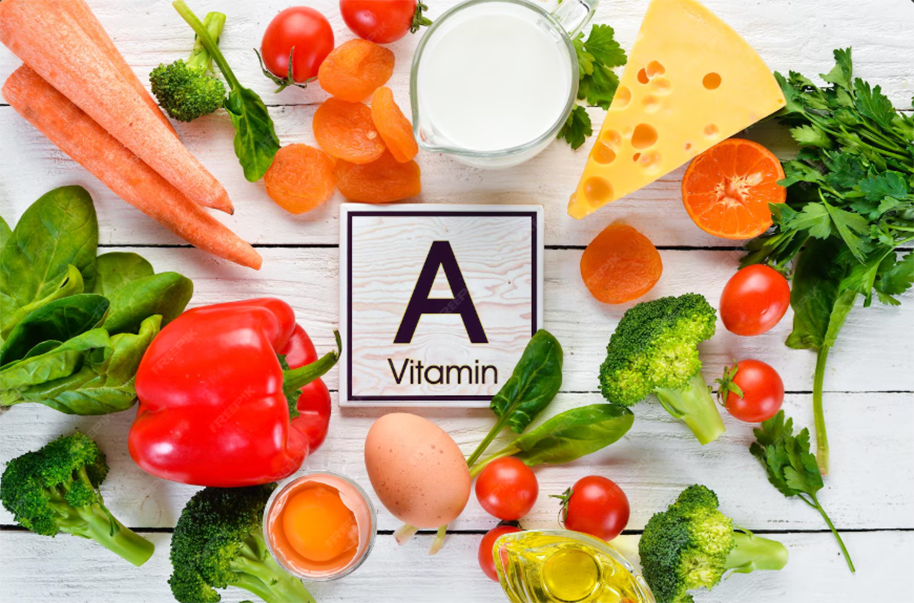
But what is vitamin A found in?
Animal-based sources (Retinol)

In these, vitamin A is already present in an active form, the body does not need to convert it, it can be used immediately.
Liver (chicken, beef, pork): The “champion”. A small portion once a week (e.g. grilled liver or liver cream) is enough, because it is stored in a concentrated form in the liver.
Egg yolk: It is good boiled or fried, the fat in it helps the absorption of the vitamin.
Fatty dairy products (butter, hard cheeses): Fat is the key here; vitamin A is hardly utilized from skimmed (0.1%) milk.
Fish oil / Fatty fish: E.g. cod liver oil or salmon.
Plant Sources (Beta-Carotene) – “The Basics”

Here, the body must convert the carotene into retinol.
Carrots, pumpkin, sweet potatoes: Steam or boil them! The heat treatment breaks down the plant cell walls, releasing the carotene.
Fat: Always eat a little oil, butter or cream with them. Without fat, most of the beta-carotene simply passes through you without being absorbed.
Spinach, broccoli, dark green leaves: Although they are green, they contain a lot of beta-carotene (only chlorophyll suppresses the orange color). These are also worth wilting or eating with a little olive oil.
Tomatoes: Lycopene and carotenoids are better utilized as a concentrate (ketchup) than raw.
The “bio-hack” in the kitchen
For animal sources: No matter the form, it is well absorbed.
For plant sources: Heat treatment + Fat. About 3-5% of the carotene is utilized from chewing a raw carrot, while up to 30-50% from a beet stewed with a little oil.
Fat is the “transport vehicle” for vitamin A.
Transport (Micelles): Vitamin A and beta-carotene are fat-soluble. In order to pass through the intestinal wall into the bloodstream, your body has to pack it into tiny fatty “transport vessels” (micelles). Without fat, these vessels cannot be built.
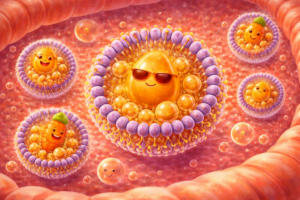
Extraction: Beta-carotene is difficult to release from the fibrous cells of vegetables (e.g. beets). Steaming with fat loosens the plant cell walls, making the vitamin more accessible for digestion.
Efficiency: Without fat, only about 5% of beta-carotene is utilized, while with a little oil or butter, this ratio can jump to 30-50%.
In short: Without fat, the vitamin simply “passes through” you without being absorbed.
One important caveat: Vitamin A is sensitive to excessive heat and oxygen. If you cook eggs (or liver) for too long at very high temperatures until they are completely dry and burnt, some of the vitamin molecules will break down (oxidize) and lose their effectiveness.
and what about absorption from supplements?
In the case of dietary supplements, the absorption of vitamin A depends largely on the form of the preparation and what you eat with it. Since it is a fat-soluble vitamin, the effectiveness of supplements is governed by the same biological rules as food.
Softgel capsules: In these, the vitamin is usually already dissolved in some kind of oil. This form provides better absorption than dry tablets, because the active ingredient arrives in the intestinal tract already dissolved.
Tablet or powder: Here, the vitamin must first dissolve in the fat in the stomach and intestines. If there is no fat, the absorption efficiency can be significantly reduced, up to 60%.
When and with what to take it?
During meals: It is always worth taking the supplement during a main meal containing fat (such as lunch or dinner). The presence of a little olive oil, avocado, nuts, or fatty meat drastically improves the delivery of the vitamin into the bloodstream.
Resources to read:
https://optics.org/news/15/11/33
https://www.hopkinsmedicine.org/health/wellness-and-prevention/nutrition-and-eye-health
https://pmc.ncbi.nlm.nih.gov/articles/PMC8835581/
https://www.hopkinsmedicine.org/health/wellness-and-prevention/nutrition-and-eye-health
https://www.youtube.com/watch?v=nEELCK3hnvU&t=4s
https://www.youtube.com/watch?v=HG5BfsaoiE0
Antioxidant activities of carotenoids (NCBI)
Vitamin A and Immune Function (Journal of Clinical Medicine)
The role of Retinoic Acid in T-cell trafficking (ScienceDirect)
https://www.frontiersin.org/journals/endocrinology/articles/10.3389/fendo.2024.1298851/full
https://www.frontiersin.org/journals/endocrinology/articles/10.3389/fendo.2024.1298851/full
https://ajcn.nutrition.org/article/S0002-9165(23)29058-9/fulltext
NCBI / PubMed (Vitamin A and Bone Health)
Journal of Nutrition
The Merck Manual (Orvosi Kézikönyv)
WHO (World Health Organization)