Calcium at a cellular level
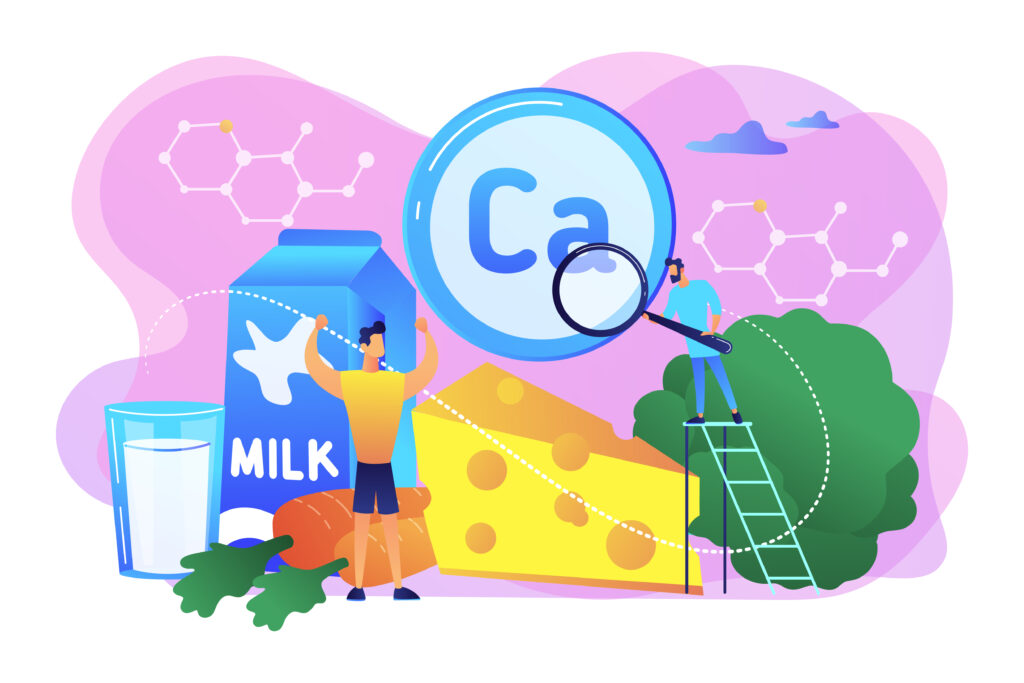
Imagine your body as a living castle, solidified by a massive white mineral: calcium . This “biological steel” is not only the framework for everything you do, but also the spark that sets your muscles in motion and connects your thoughts.
Calcium is an essential mineral , about 99% of which is found in the bones. The remaining 1% is found in the blood, in the intercellular space , and within the cells.
It is no coincidence that its primary role is in maintaining strong bones , which of course requires the presence of other nutrients and exercise.
Although quantitatively its main function is to build bone, in cell biology and physiology it is the maintenance of the remaining 1% (serum calcium) that is more critical. If the blood calcium level drops even minimally, the body immediately begins to break down bone to replace it .
Let’s start with one of the most important processes.
The topic of bones, teeth, and joints is a perfect starting point. Let’s look at how the calcium in milk gets to the bones, and then what happens there at the cellular level.
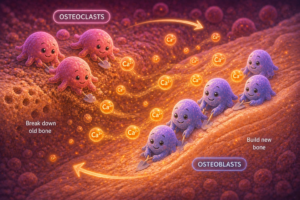
First, a little basic bios. Bone is not a dead piece of rock, but a constantly changing, incredibly active living tissue. At the cellular level, there is a constant “breakdown and build-up” that is carried out by two main cell types:
Osteoblasts (the bone builders) are cells responsible for creating new bone tissue.
When calcium arrives at the bones, osteoblasts create an organic framework (collagen mesh). They begin to layer calcium and phosphorus onto this framework.
Calcium and phosphorus combine to form crystals called hydroxyapatite . This crystalline structure gives bones and tooth enamel their rock-hard strength!
Osteoclasts (the bone destroyers) do the “degradation”.
They produce acids and enzymes that dissolve old, worn-out bone tissue, releasing calcium into the bloodstream.
Although it sounds scary, this process ( bone remodeling ) is essential for our bones to remain flexible and for micro-injuries to heal.
What about teeth and joints?
The fate of calcium in teeth is a little different. Tooth enamel is the hardest tissue in the body. It is produced by osteoblast-like cells ( ameloblasts ) during growth, but there are no living cells in the finished tooth enamel. Here, calcium can be absorbed directly from saliva by the tooth surface (remineralization).
Joints: Calcium does not play a direct role in the articular cartilage itself. However, the density of the bone ends that support the joint (subchondral bone) is critical. If the bone beneath the cartilage is weak, the joint is more likely to deform and wear out.
AND then let’s get into the daily process!
When you drink a glass of milk, the calcium in it is not yet ready to be absorbed. A complex biological “courier service” is required:
The calcium in milk is mostly bound to proteins or present as “calcium phosphate.” Stomach acid helps dissolve these and convert them into free calcium ions.
Calcium in milk or dietary supplements is almost never present “free”, but rather bound to other elements. The most common are “calcium carbonate” or “calcium phosphate”.
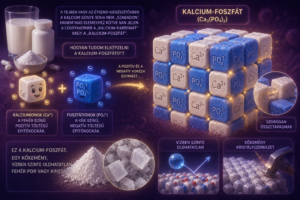
How can I imagine calcium phosphate?
Imagine a LEGO castle. Calcium ions are the white, positively charged building blocks. Phosphate ions are the blue, negatively charged building blocks. Because positive and negative attract each other, these blocks stick together tightly. This is calcium phosphate. A rock-hard, white powder or crystal that is almost insoluble in water.
The stomach: Stomach acid is made up of hydrochloric acid (HCL). The chemical property of acids is that they release hydrogen ions (H+). When hydrochloric acid meets, for example, calcium carbonate (CaCO3), the hydrochloric acid aggressively breaks the bond between the elements. The calcium breaks away from its partner and becomes a free calcium ion (Ca2+), which is already dissolved in the gastric juice.
This process does not occur within the cells , but in the stomach cavity.
The small intestine: Free calcium ions are absorbed through the wall of the small intestine into the bloodstream. This requires a special protein channel (TRPV6) . This channel is regulated by vitamin D3. Without vitamin D, most of the calcium would simply pass through you and be excreted.
Very simply:
Calcium enters the small intestine, then it reaches the TRPV6 channel, which is on top of the enterocyte (gut cell). This absorbs the calcium, which is then transported to the other side by a member of our group called calbindin, where an active pump pushes the calcium out into the bloodstream!
Once it enters, it must reach the bone tissues through the blood vessels .
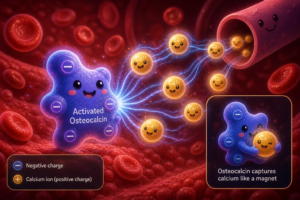
In order for calcium from the blood to actually migrate into the bones, rather than being deposited in the walls of blood vessels (causing sclerosis), vitamin K2 is needed. It activates a protein called osteocalcin , which attracts calcium into the bone matrix like a magnet.
So now what is very important for us!!! Calcium does not work on its own. It needs vitamin D3 (to be absorbed from the intestines) and vitamin K2 (to get from the blood to the bones).
Vitamin K2 and Osteocalcin
Your bone-building cells ( osteoblasts ) are constantly producing a protein called osteocalcin . Think of this protein as a magnet that’s turned off. Vitamin K2 arrives, performs a chemical reaction ( carboxylation ) on the protein. This process “turns the magnet on.”
Calcium uptake: Osteocalcin becomes negatively charged. Since calcium ions are positively charged, CA2+ is literally magnetized by activated osteocalcin and grabs calcium circulating in the blood. Incorporation: Once osteocalcin has captured the calcium, it anchors it neatly into the collagen matrix of the bone , initiating crystallization (hardening of the bone).
Bone-breaking cells (osteoclasts) continuously dissolve old bone, and bone-building cells (osteoblasts) build new bone from incoming calcium, so it is an always active process.
At a young age, osteoblasts (builders) are much more active. After the age of 30, the balance is reversed and osteoclasts (breakdown cells) can become predominant, which can lead to osteoporosis without adequate calcium and vitamin intake.
When your blood calcium levels drop, your body immediately releases calcium stored in your bones to help your heart and nervous system function. (You need it for these things too, as I’ll explain shortly.)
Because of this constant cellular activity, the adult human skeleton is completely replaced every 10 years or so!
How are our teeth different?
In childhood, they function similarly to our bones, with the difference that here Ameloblasts = enamel-forming cells build the tooth from calcium circulating in the blood.
Unfortunately, in adulthood, this is a little different. Unlike bone, enamel is no longer a living tissue, there is no active internal remodeling. The body works from the existing teeth and our daily habits decide the fate of our teeth.
Saliva is mainly a surface maintenance system : Saliva contains: calcium, phosphate, bicarbonate, proteins.
When we eat and drink, acid is produced that damages and “breaks down” our teeth. When the acid attacks the enamel, saliva neutralizes the acid and can repair micro-damages on the surface.
A continuous “ remineralization and demineralization ” takes place.
But what are these??
If the oral cavity becomes acidic (bacteria produce acid after sugar): pH drops below approx. 5.5 The acid starts to dissolve the crystals in the enamel: calcium + phosphate ions come out of it
In other words: minerals are lost from the tooth. This is demineralization .
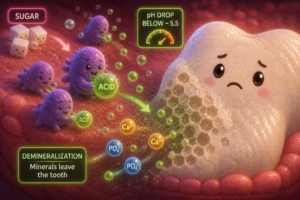
Saliva contains bicarbonate. This buffers the acid, meaning it balances the pH of the mouth. When the pH returns to normal and there is calcium and phosphate in the saliva, these can be re-built into the enamel surface . This is called remineralization .
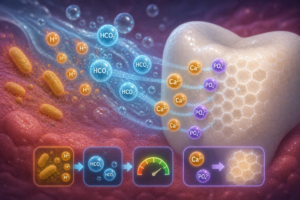
This goes on all day. There is a constant battle going on at the tooth:
After eating: sugar → bacteria → acid → demineralization
Between meals: saliva restores → remineralization
If the repair is more than the damage = healthy tooth
If the damage is more than the repair = hole
This is why frequent snacking, sugary, acidic soft drinks, for example, are bad for your teeth.
If you snack every hour, your pH will always drop and there will be no time to improve it.
What helps remineralization?
Fluoride: Fluoride can be incorporated into the crystal and is more acid-resistant.
Good saliva production: Chewing, staying hydrated, and sugar-free gum can help.
Calcium/phosphate availability: It is also present in normal saliva, diet also matters.
What makes it worse?
Dry mouth, reflux, soft drinks, frequent snacking, poor oral hygiene, low saliva.
What happens, for example, when we drink Coke?
For the sake of example, let’s go through the process…
The coke is coming..
Coke attacks on two fronts at once:
The first is its own acidity – pH can be around 2.5 (very acidic) – It can contain: – phosphoric acid – carbonic acid – citric acid (in some drinks)
The second is Sugar which is the fuel for bacteria in the mouth.
The effect of Acid:
The acid directly affects the enamel.
The surface of the crystal begins to dissolve:
Ca²⁺ and phosphate ions leave the enamel
This is still microscopic, not a hole, just surface mineral loss.
Bacteria:
The “bad” bacteria in your mouth (e.g. Streptococcus mutans and others) eat sugar.
Fermentation occurs: sugar → organic acids (mainly lactic acid) are produced.
Now not only is the acid from the cola attacking, but local bacterial acid production is also starting.
The pH drops quickly.
Normally: pH ~6.8–7
Now it can drop: pH below 5.5
From here, demineralization accelerates.
More and more minerals are released from the crystal lattice.
The surface of the enamel: becomes softer, its microscopic gaps grow
Once a little time has passed and you haven’t eaten or drunk anything, no more sips:
The saliva begins to defend itself.
What is he doing?
- Buffered -> Bicarbonate neutralizes acid.
- Washes out the sugar/acid
- Provides calcium and phosphate
The repair begins.
pH gradually normalizes.
Saliva rebuilds surface minerals and remineralization begins.
As long as we sip continuously and slowly / drink, eat, snack every half hour… remineralization does not start .
Demineralization persists for as long as possible, and tooth decay becomes more and more permanent.
To protect our teeth, it is important not to eat too often, avoid acidic drinks, and chew xylitol gum and products, which play a significant role in killing bacteria!!!
But calcium is not only important for bones and teeth. It plays an important role in regulating muscle function .
When you move.. Whether you’re just typing or scrolling with your mouse, your finger.. Or every moment your heart beats… Your brain’s motor cortex sends electrical signals through nerve pathways to your muscles, an electrochemical impulse that contracts the muscle by letting in calcium.
At the cellular level Muscle fibers have two main proteins: actin and myosin . At rest, a “safety lock” (a protein called troponin) prevents them from coming together. Calcium ions attach to this lock, pushing it out of the way, allowing the muscle fibers to slide into each other and contract.
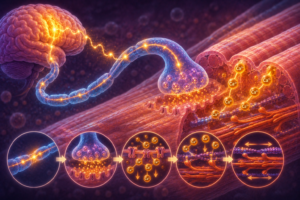
So, every muscle contraction requires calcium! What does this have to do with nerves? All classic nervous system signaling between your nerve cells (whether it’s serotonin, dopamine or adrenaline) is a calcium-dependent process!
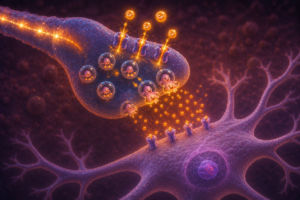
Your nerve cells have so-called “neurotransmitters” bouncing around to deliver messages.
The neurotransmitter cannot “jump” between cells on its own, so the influx of calcium ions at the end of the nerve cell provides the physical push to empty the packages containing serotonin (or other messengers), thus enabling everything we call human existence: the birth of conscious thoughts, finely tuned movements from typing to dancing, and the maintenance of our emotional balance, because without calcium, your brain would manufacture the compounds necessary for happiness or peace of mind in vain, they would never reach their destination .
In fact, it also plays a role in blood clotting!
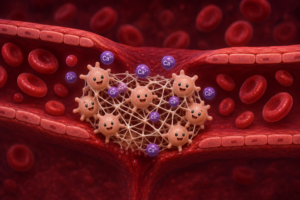
Platelets must stick together and form a stable mesh (fibrin) over the wound. The clotting factors can only be activated in the presence of calcium ions. Calcium helps these proteins stick to cell membranes where they can do their job, stopping the bleeding.
We have reached one of the most important parts.
What we can do for ourselves..
Diet! What should we eat? How, supplements?
From food primarily: Ca + D + K2.
🥛 Dairy products
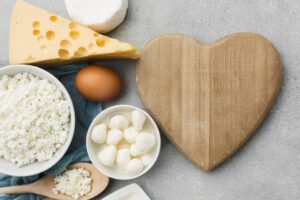
The calcium in dairy products is highly absorbable, and they are also rich in phosphorus, which is calcium’s faithful companion in bone building. [ 1 ]
Examples: Plain yogurt, kefir, cottage cheese, and hard cheeses (like Cheddar or Parmesan). Aged cheeses (like Gouda or Emmental) not only provide calcium, but are also a source of vitamin K2 thanks to the bacteria that live in them! [ 1 , 2 , 3 , 4 , 5 ]
🐟 Treasures of the Sea (Where Calcium and Vitamin D Meet)
Many people don’t think of fish when it comes to calcium, but small fish with soft bones are unbeatable. [ 1 , 2 ]
Examples: Oily sardines, herring, or canned salmon. Not only do they contain calcium, but their flesh is also full of natural vitamin D. [ 1 , 2 , 3 , 4 ]

🥬The Dark Green Leaves
The plant world is also full of calcium, but you have to be careful here! Although spinach has a lot of it, the oxalic acid in it binds the calcium, so it cannot be absorbed. [ 1 ]
Examples: Kale, broccoli, bok choy, and turnip greens. These plants contain calcium and plenty of vitamin K1, which supports blood clotting and, indirectly, bones! [ 1 , 2 , 3 , 4 ]

🫘 Legumes and Seeds
If someone avoids milk, this is where they should look for a solution. [ 1 ]
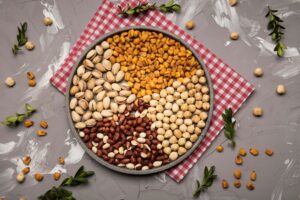
Examples: Tofu (especially versions made with calcium sulfate), sesame seeds, chia seeds, almonds, and white beans. Natto, a Japanese fermented soybean dish, is the absolute richest source of vitamin K2 (MK-7) in the world! [ 1 , 2 , 3 , 4 , 5 , 6 ] Mix natto with calcium-fortified tofu and steamed kale or broccoli!
The egg yolk
Egg yolk contains both vitamin K2 and vitamin D. [ 1 ]
Make scrambled eggs or an omelet. If you throw in some cheese (calcium and K2) and spinach or broccoli (calcium), you’ve covered your teeth for the day with just one meal! [ 1 , 2 , 3 , 4 ]

Without natural fats, there is no absorption! If you are trying to get calcium from vegetables (like kale, broccoli ), always drizzle them with a little olive oil or eat them with butter. Fat-soluble vitamins D and K2 need fat. They can travel through your body wrapped in fat!
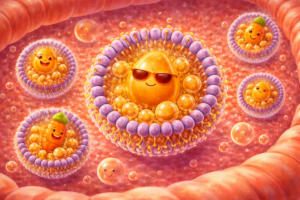
Pay attention to your companions! Magnesium is also key to calcium absorption (it also helps balance calcium levels and supports vitamin D activation). Eat lots of nuts (almonds, cashews) and pumpkin seeds with your main meals.
Avoiding the “snack trap” : It’s no use eating 1000 mg of calcium a day if you’re eating sugary or acidic snacks (or coffee, sodas) every hour during the day. Your mouth will remain constantly acidic, and demineralization (mineral loss) in your teeth will prevail over remineralization.
The power of sunlight: While foods can help, it’s nearly impossible to maintain adequate vitamin D levels through diet alone (especially in the winter). Spend time in the sun in the spring and summer, and in the fall and winter months, it’s a good idea to take vitamin D3 and vitamin K2 supplements to ensure the best possible results! [ 1 , 2 , 3 , 4 , 5 , 6 , 7 , 8 ]
In addition, many fruit juices, milk substitutes, tofu and cereals are fortified with calcium.
Calcium absorption varies depending on the type of food; from dairy products and fortified foods, absorption is about 30%, while from certain plants, absorption may be much lower due to the presence of compounds that form indigestible salts with calcium.
And then we come to the question of accessories:
In what forms can we encounter it?
- Calcium carbonate – This is the most common form, produced from chalk or limestone powder. [ 1 ]
- Advantage: Very cheap, and a small tablet contains a lot of pure calcium (40% elemental calcium)
- Disadvantage: It requires more stomach acid to be absorbed. Therefore, it is always worth taking it with food to increase absorption. Unfortunately, for many people, it can cause gas, bloating, and constipation. [ 1 , 2 , 3 , 4 ] For those who have low stomach acid, taking it without food will also result in poor absorption.
However, in effervescent tablet form, they can also be consumed on an empty stomach.
- Calcium citrate – This form is a compound formed with citric acid. [ 1 ]
- Advantage: It does not require an acidic environment to dissolve, so it can be absorbed on an empty stomach. An excellent choice for the elderly (who naturally have less stomach acid) or those taking antacids.
- Disadvantage: Contains only 21% elemental calcium, so you need to take larger or more capsules to get the same dose
However, in general, calcium supplements are better absorbed when taken with food!
- Calcium malate / Calcium citrate malate
A compound formed by malic acid and citric acid. [ 1 ]
- Advantage: Research shows that this form has a bioavailability of up to 35% absorption. It is gentle on the stomach, and is often used to fortify products. [ 1 , 2 ]
Another critical factor for absorption is the vitamin D mentioned above.
It is important how many mg you take!
It is recommended to take a maximum of 500 mg at a time for better absorption. Absorption decreases with higher amounts.
For example, the body absorbs approximately 36% of a 300 mg dose of calcium and 28% of a 1,000 mg dose.
The differences between calcium forms are real, but clinically modest, and absorption is determined more by vitamin D status, dosage, and individual physiology than by the salt form itself. 🙂
When not?
The absorption of dietary calcium is slightly reduced by caffeine and phosphorus intake. So if you drink cola or coffee, don’t time it with your calcium intake!
It is also not worth taking with: alcohol, antacids, medication, carbonated soft drinks, iron, phosphorus, zinc. Due to the high oxalic acid content, it is not recommended with these foods: cocoa powder, chocolate, sorrel, spinach, rhubarb, celery root, beetroot, soy, tofu, beans, almonds, walnuts, cashews, oranges, pineapple, raspberries. Due to the high phytic acid and fiber content, it is not recommended with whole grain products either.
Sources:
https://ods.od.nih.gov/factsheets/Calcium-HealthProfessional/
https://pmc.ncbi.nlm.nih.gov/articles/PMC6316542/
https://www.ncbi.nlm.nih.gov/books/NBK482128/
https://nutritionsource.hsph.harvard.edu/calcium/
https://pmc.ncbi.nlm.nih.gov/articles/PMC9124578/
https://elifesciences.org/articles/95083
https://my.clevelandclinic.org/health/body/24871-osteoblasts-and-osteoclasts
https://www.ncbi.nlm.nih.gov/books/NBK499863/
https://www.ncbi.nlm.nih.gov/books/NBK109827/
https://www.ncbi.nlm.nih.gov/books/NBK109827/
https://www.sciencedirect.com/topics/immunology-and-microbiology/bone-remodeling
https://pmc.ncbi.nlm.nih.gov/articles/PMC5506916/
https://www.youtube.com/watch?v=1qjUTt3EGDM
https://www.ncbi.nlm.nih.gov/books/NBK56060/
https://books.lib.uoguelph.ca/human-physiology/chapter/calcium-and-phosphate-regulation/
https://www.ncbi.nlm.nih.gov/books/NBK56060/
https://books.lib.uoguelph.ca/human-physiology/chapter/calcium-and-phosphate-regulation/
https://go.drugbank.com/drugs/DB11348
https://gerinces.blog.hu/2024/01/25/a_kalcium_fontos_de_onmagaban_keves_a_csontok_egeszsegehez
https://pmc.ncbi.nlm.nih.gov/articles/PMC1851862/
https://pmc.ncbi.nlm.nih.gov/articles/PMC10721582/
https://pmc.ncbi.nlm.nih.gov/articles/PMC10721582/
https://www.health.ny.gov/publications/1980.pdf
https://ods.od.nih.gov/factsheets/Calcium-HealthProfessional/
https://www.ncbi.nlm.nih.gov/books/NBK482128/
https://pubmed.ncbi.nlm.nih.gov/17507729/
https://www.prevention.com/food-nutrition/a68123708/calcium-citrate-vs-calcium-carbonate/