Detoxification with a scientific approach
First: what does detoxification actually mean?
In the classic, physiological sense, detoxification is the process by which the body transforms and/or removes potentially harmful, foreign or unnecessary substances. These can include:
– environmental toxins (e.g. pesticides, heavy metals),
– food-derived compounds,
– drugs and their metabolites,
– by-products of our own metabolism (e.g. ammonia, bilirubin, hormone metabolites).
This is not a “program”, not a cure, but a continuous biological process.
“Detox cures” (juice fasting, juice cleanses, teas, etc.) on the other hand are not the same as physiological detoxification. They are more of marketing terms that often make exaggerated or false promises.
Which organs carry out detoxification?
The liver is the central organ. Most of the changes take place here
The kidneys are responsible for the excretion of water-soluble substances.
The intestinal tract is a key player in regulating excretion and reabsorption.
The lungs remove volatile substances and CO₂.
The skin is involved to a lesser extent (sweating), but is not a primary detox organ.
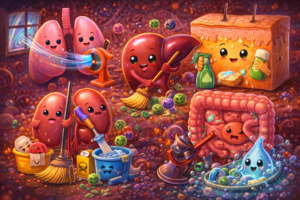
Liver detoxification occurs in two main phases (some sources also mention a third phase).
Phase 1 – Functioning, Transformation
Performed by enzymes called cytochrome P450.
Fat-soluble toxins are often temporarily converted into more “toxic” intermediates. That is, even worse.
Cytochrome P450 (CYP) enzymes are heme-containing proteins in the liver that primarily break down drugs, toxins, and endogenous compounds (e.g. hormones). During the process, they attach molecular oxygen to the substrate, thus converting water-insoluble substances into a more easily excreted (more polar) form.
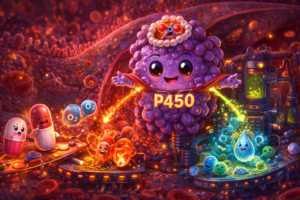
Cytochrome:
“Cytochrome” is a collective term. It refers to proteins that:
– contain a heme group (a porphyrin ring with iron in the middle),
– participate in electron transfer reactions,
– accept or donate electrons by changing the state of iron Fe²⁺ ↔ Fe³⁺.
= a cytochrome is an electron-handling protein
P450: a family of enzymes.
Function:
– oxidation of fat-soluble molecules,
– i.e. incorporation of an oxygen atom into the substrate (e.g. addition of –OH group).
What is necessary to take for this detoxification?
– B vitamins (B2, B3, B6, B12, folate)-> for amino acid metabolism, methylation
– iron,
– magnesium-general cofactor
– protein (amino acids).
Phase 2 – “conjugation”
The body attaches a “handle” to the reactive molecules (process 1 toxins) i.e. highly polar or charged groups (glutathione, sulfate, methyl group, glucuronic acid, etc.) to make them water soluble and excreted through the kidneys.
Key nutrients for this that you should include:
– glutathione (cysteine, glycine, glutamic acid),
– sulfur amino acids,
– vitamin C,
– zinc,
– selenium,
– choline,
– methionine.
chemical groups for those who are more interested:)
– carboxyl group (–COO⁻)
– hydroxyl group (–OH)
– sulfate group (–SO₄²⁻)
– thiol group (–SH)
– amino group (–NH₃⁺)
!! If Phase I is over-stimulated but Phase II is under-funded (nutrient deficiencies, chronic stress), more damage will occur, not less. This is one reason why aggressive “detox diets” can make things worse. !!
The most important enzymes of phase 2 (Conjugation enzymes)
These enzymes add the “water-soluble label” to toxins:
- GST (Glutathione-S-transferase):
What does it neutralize? Heavy metals (mercury, lead), mycotoxins (e.g. aflatoxin), pesticides, and carcinogens (PAHs) produced during combustion.
Own substances: Neutralization of aggressive free radicals produced in phase 1.
- UGT (UDP-glucuronosyl transferase):
What does it neutralize? BPA (from plastics), morphine, naproxen, and residues of many other drugs.
Own substances: Excess bilirubin (from aged red blood cells) and some steroid hormones.
- SULT (Sulfotransferase):
What does it neutralize? Paracetamol (to a lesser extent), food additives, artificial colors.
Own substances: Inactivation of estrogen and thyroid hormones, breakdown of neurotransmitters (e.g. dopamine).
- NAT (N-acetyltransferase):
What does it neutralize? Aromatic amines from exhaust gases and tobacco smoke, certain antibiotics (e.g. sulfonamides).
Own substances: Various industrial chemicals and dyes.
- MT (Methyltransferase):
What does it neutralize? Arsenic (it becomes less toxic through methylation).
Own substances: Breakdown of histamine (treatment of allergic reactions) and adrenaline.
Interestingly, a toxin can often be processed by several enzymes (parallel pathways), so if one system becomes overloaded, the other can take over the task!
Phase 3
The already neutralized, water-soluble toxins are “ejected” through the cell membrane. This is done by special transport proteins that use ATP (energy) for the process:
P-glycoprotein (P-gp / ABCB1): The best-known “pump” that removes drugs and toxins from cells into the bile or intestine.
MRPs (Multidrug Resistance-associated Proteins): For example, MRP2, which transports substances that are conjugated with glutathione or glucuronic acid in phase 2 into the bile.
BCRP (Breast Cancer Resistance Protein / ABCG2): A broad-spectrum transporter that is particularly responsible for the excretion of sulfate conjugates and certain carcinogens.
OATPs (Organic Anion Transporting Polypeptides): These help to transport toxins from the blood into the liver cells, where they can be eliminated by the above pumps after processing (phases 1 and 2).
If these transporters are inhibited (e.g. due to certain drug interactions), toxins that were neutralized in Phase 2 can re-enter the circulation or accumulate in the liver cells.
Summary:
- Phase 1: Transformation (Oxidation): The liver begins to break down toxins (e.g. drugs, alcohol, caffeine) using the Cytochrome P450 enzyme family. During this phase, toxins often become more reactive and toxic than they were originally, while free radicals are formed.
- Phase 2: Neutralization (Conjugation): During this phase, the liver attaches various substances (e.g. amino acids, sulfur, or glutathione) to the intermediate products of Phase 1. This process makes the harmful substances water-soluble and safe for transport.
- Phase 3: Removal (Elimination): The already neutralized and water-soluble substances leave the liver cells and are excreted from the body.
Why is balance important?
If phase 1 is too fast (for example, due to excessive caffeine or alcohol consumption) but phase 2 is slow (due to nutrient deficiencies), dangerous intermediates can build up in the body, which can lead to cell proliferation and inflammation.
Of course, this is the rarer case.. in most of us it works perfectly in balance!
Supporting Factors
Antioxidants: Vitamins (C, E) and selenium to fight free radicals.
Nutrients: B vitamins, amino acids (glycine, taurine) and cruciferous vegetables (e.g. broccoli) for enzyme function.
Hydration: Sufficient water to support Phase 3 excretion.
The big question:
Does it make sense to “detoxify” with food?
Classic “detox diets” make no sense from a scientific perspective.
However, liver-supporting herbs do.
The most important differences:
The liver detoxifies itself: In a healthy person, the liver does its job 24 hours a day, and does not need a special “cleanse” or cure for this.
The dangers of “cures”: Many aggressive cleansing cures (e.g. laxatives, extreme fasting) can do more harm than good, and according to some Johns Hopkins Medicine, certain supplements can even cause liver damage.
Certain herbs do not “extract toxins”, but help the regeneration of liver cells or protect them from inflammation. Examples include milk thistle (silymarin), artichoke or turmeric.
A dangerous misconception, for example, is that the stones removed during so-called “liver and bile cleansing cures” (e.g. with oil and lemon) are not actually gallstones, but soap balls made of oil and stomach acid, and the cure can also cause biliary spasms or blockages.
In summary: Instead of thinking about periodic cures, long-term support for the liver helps: avoiding alcohol and unnecessary medications, proper hydration, and incorporating liver-protective herbs (e.g. in the form of tea) into your everyday life.
The precise wording is important here.
Foods do not wash out toxins!
Foods:
– reduce toxin load,
– provide components for detox enzymes,
– support excretion (bowel movement, bile flow).
So they support the body’s own detoxification system.
Which foods really play a role, and how?
Cruciferous vegetables (broccoli, Brussels sprouts, cabbage)
Cruciferous vegetables: Broccoli, cauliflower, Brussels sprouts, and cabbage contain compounds (glucosinolates) that increase the liver’s natural enzyme production, helping to flush out harmful substances.
Sulforaphane is a very powerful antioxidant, sulfur-rich compound, and a powerful anti-inflammatory, and is found in cruciferous vegetables.
Glucoraphanin is a natural, sulfur-rich compound (glucosinolate) that is found primarily in cruciferous plants, most notably broccoli and broccoli sprouts. In the body, it is converted into sulforaphane, an extremely powerful anti-inflammatory agent that supports detoxification, liver enzymes, and cell protection.
The meeting of the precursor and the enzyme: The plant contains a substance called glucoraphanin. When you chew or cut the vegetable, an enzyme called myrosinase (also found in broccoli) is released, which converts glucoraphanin into active sulforaphane. In other words, when the plant tissue is damaged (chewed, cut), myrosinase meets glucoraphanin and creates sulforaphane.
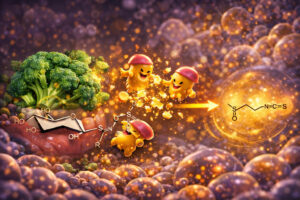
Activation of the Nrf2 pathway: Sulforaphane enters the cell and turns on a protein. This protein migrates to the nucleus and connects to the “Antioxidant Response Element”, which is the switch for detoxification genes!
NRF2 is responsible for triggering the production of many antioxidant and detoxification enzymes.
For example, “boosting” phase II enzymes!
Activation of Nrf2 dramatically increases the production of phase II detoxification enzymes (e.g. glutathione-S-transferase, quinone reductase). This is critical because it allows the liver to more quickly neutralize the aggressive intermediates produced in Phase I before they can damage DNA.
It also boosts glutathione levels! Glutathione is essential for making toxins water-soluble.
Cell Biology Pro-Tip: Sulforaphane requires heat-sensitive enzymes to form. Overcooking broccoli destroys the enzyme. Steam it for no more than 3-4 minutes, or add a little raw mustard seed/horseradish to your meal to “replenish” myrosinase and maximize its effects!
Lifeline: Certain bacteria in your gut flora have some myrosinase activity, but it’s much less effective than taking the plant enzyme.
Alliums (garlic, onion)
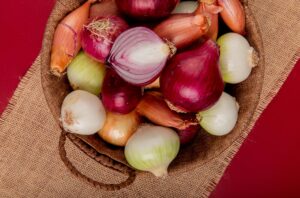
Sulfur compounds → support for glutathione synthesis.
Glutathione (GSH) is a key antioxidant in the body, a sulfur-containing “tripeptide” (cysteine, glycine, glutamic acid) produced in cells, which protects cells from oxidative stress, supports detoxification (especially in the liver) and indirectly strengthens the immune system. Its level can decrease due to stress, age or disease, which can be replaced with nutritional supplements.
Main functions and characteristics:
Antioxidant: Neutralizes free radicals, regenerates vitamins C and E.
Detoxification: Helps eliminate some heavy metals and toxic substances.
Cell protection: Essential for protecting mitochondria and DNA.
Decreased levels: Aging, poor diet and lack of exercise reduce it.
Supplementation: Available in capsule form (often combined with vitamin C) or intravenously, but not as beneficial orally. NAC + protein intake is recommended.
It may be especially recommended in cases of frequent infections, liver disease, diabetes, or increased stress.
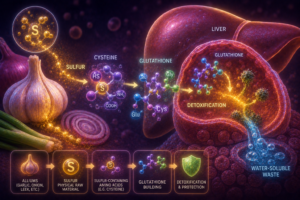
How does sulfur work in the cell?
The organosulfur compounds found in onions (e.g. allicin and diallyl sulfide) work at two levels:
Activate phase II: Similar to sulforaphane, they turn on the Nrf2 pathway, which instructs the cell to produce more detoxifying enzymes.
Sulfur donors: The liver needs a physical raw material (sulfur) for detoxification. Alliums indirectly provide sulfur-containing amino acids (e.g. cysteine) through sulfur, which are needed to build glutathione.
How does glutathione work as an antioxidant?
Electron donation: Neutralizes free radicals while itself being oxidized (turning into GSSG) and then recycled by the body.
Conjugation (The “sticker”): In phase 2, the GST enzyme literally sticks the glutathione molecule onto the toxin. This “sticker” makes the toxin water-soluble and recognizable so that it can be eliminated.
Although glutathione is present in all cells, most of the process takes place in the liver cells (hepatocytes), where the highest concentration of glutathione is found (up to ten times higher than in other cells). The sulfur arrives in the bloodstream via the hepatic portal vein, entering the hepatocyte, where synthesis and defense take place in the cytoplasm and mitochondria.
Cell Bios interesting fact: Garlic’s active ingredients (sulfides) increase glutathione levels not only in the liver but also in red blood cells, protecting them from oxidative damage.
Leafy Greens
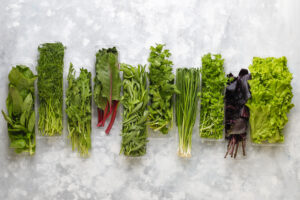
Leafy greens (spinach, sorrel, kale) have a slightly different effect: they work not only inside the liver cells, but also “outside the gate,” in the digestive tract and in the bloodstream.
The structure of chlorophyll is eerily similar to our own hemoglobin, only instead of iron, magnesium sits in the middle.
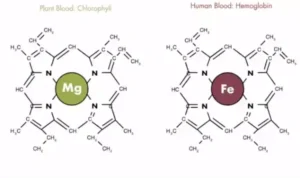
Complex formation: Chlorophyll can form a stable physical bond (so-called complex) with certain carcinogens, such as aflatoxin produced by molds or polycyclic aromatic hydrocarbons produced in fried meats.
Inhibited absorption: Because this large chlorophyll-toxin complex is too large to pass through the epithelial cells of the intestinal wall (enterocytes), the toxin does not enter the bloodstream, and thus does not reach the liver. It is simply excreted in the feces. Simply… “the large chlorophyll clings to the toxin, making it too big to fit through the bloodstream”
If the toxin does enter the cell, chlorophyll derivatives (such as chlorophyllin) provide direct protection:
Antimutagenic effect: They prevent reactive toxins from binding to the DNA molecule and causing mutations.
Enzyme modulation: Leafy greens can also fine-tune the activity of Cytochrome P450 (phase 1) so that too many harmful intermediates are not produced.
The central magnesium atom of chlorophyll is released during absorption. Magnesium is required for over 300 enzyme reactions and plays a major role in the detoxification process.
Fiber (soluble and insoluble)
The “detoxification” of fiber takes place in the lumen (cavity) of the intestine. I would rather say that it supports detoxification.
The insoluble fibers (e.g. lignin, cellulose) that we take in with whole grain baked goods, legumes, vegetables, fruits, are not absorbed and do not dissolve.
The surface of fibers (especially lignin) is full of chemical binding sites. Certain heavy metals (e.g. lead, cadmium) and hydrophobic (fat-like) toxins can adsorb (bind on their surface).
This is good because this way the toxin does not become free in the intestinal lumen, so the receptors or transport channels on the membrane of enterocytes (intestinal cells) cannot “absorb” it.
They are excreted together with the fiber.
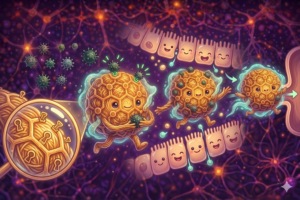
Soluble fibers (e.g. pectin, beta-glucan, psyllium) form a thick, viscous gel when in contact with water. This gel layer “slows down” toxins before they reach the intestinal wall and they are eliminated through natural bowel movements.
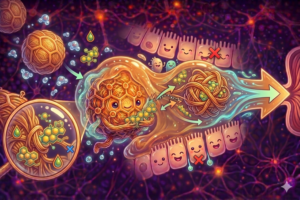
The liver often excretes toxins into its bile.
Bile acids encapsulate the toxins in a fatty shell and send them to the intestines.
Enterohepatic circulation: Our bodies are frugal, so normally 95% of bile acids are reabsorbed from the small intestine and returned to the liver. (along with toxins)
But! Fiber physically gets caught in the bile acids. Since fiber is too large to be absorbed, it “tears” the bile acids out of circulation and forces them to leave
As bile acids are removed with fiber, the liver is forced to synthesize new bile (from cholesterol and fresh nutrients), which speeds up the removal of “old” garbage and also lowers blood cholesterol levels.
The microbiome also plays a big role!
When bacteria in the colon start to break down fiber (fermentation), they produce butyric acid (butyrate).
Butyric acid is the main energy source for enterocytes (cells in the intestinal wall).
With an adequate energy supply, the connections between intestinal epithelial cells (tight junctions) remain stable. This prevents “leaky gut” syndrome, i.e. toxins slipping between cells directly into the bloodstream.
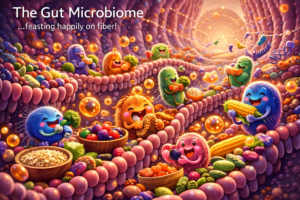
In summary: Fiber does not work inside the liver cells, but relieves the liver by cutting off the return path of toxins from the intestines.
Good sources of fiber are whole grains, vegetables, fruits, legumes… but even just chia or flax seeds mixed into yogurt, or dietary supplements.
Protein
There is no detox without amino acid supply.
Phases I and II in the liver are entirely enzyme-bound.
and what is the enzyme made of? protein!
If there are not enough amino acids, fewer enzymes are synthesized and the entire detox process will be slower.
What else is of amino acid origin?
Phase II’s glutathione! This is specifically a tripeptide: it consists of cysteine, glycine, and glutamate.
Protein protects the system, and it is also used to build the transport that removes toxins..
Between the intestinal epithelial cells there are so-called “tight junctions” and yes.. they are also proteins..
Where do we get these amino acids?
The animal sources that most of us think of.. because they contain all the amino acids in a complex, plus they have a high cysteine and methionine ratio, and their biological utilization is also better. Although the glycine ratio is often low (if there is no skin/cartilage)
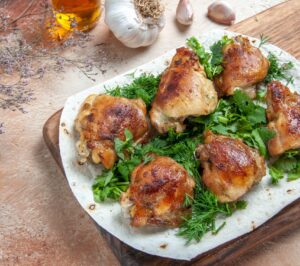
The strength of plant sources is that they are high in fiber and antioxidants, which provide indirect detox support.
Their disadvantage is that cysteine is often limited, digestibility is lower, and they do not contain all the necessary amino acids
Unless we focus on this directly and are “complete” (e.g. legumes + grains)
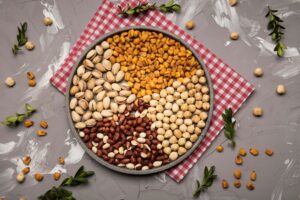
So, quality sources: Chicken, turkey, salmon, legumes, seeds, grass-fed red meat, smaller fish like sardines, eggs.
(remember, since the focus is on detoxification, the quality of the animal husbandry is very important)
Berries
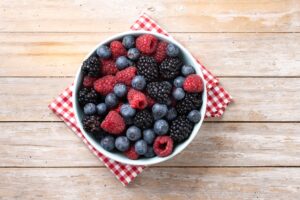
Polyphenols → antioxidant protection against free radicals generated during phase I.
Berries contain a lot of so-called “Polyphenols”..
Polyphenols are such a huge topics, that they also deserve a separate post..
The main thing you need to know about them is that they are “antioxidants”
I explained how they work in a previous post.
We already know that during detoxification by the liver, a lot of new “toxins” are produced. “Free radicals” are produced..
The essence of a free radical is that it has an unpaired electron, so it steals and destroys electrons from other cells.
On the other hand, an antioxidant has a lot of extra electrons, so it stabilizes the free radical, which no longer destroys other cells.
Polyphenols not only act directly, but also instruct the cell to strengthen its own defenses.
Polyphenols (e.g. resveratrol, quercetin) travel to the cell nucleus, then bind to a receptor there and activate a protein called Nrf2. It is like a messenger.
Nrf2 carries the polyphenol message inside the cell, enters the nucleus and binds to the ARE (Antioxidant Response Element) section on the DNA. (just how we read at the sulforaphane.)
The DNA then receives the polyphenol message and starts producing enzymes and substances that support detox: superoxide dismutase (SOD), catalase and glutathione peroxidase.
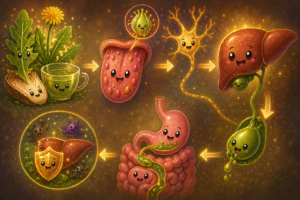
You can imagine the process more with this visualization:
And the bacteria in the gut also get full by them 🙂
Plants containing bitter substances:
We mentioned that the liver also uses bile to excrete toxins through it.
Bitter tastes, foods, spices, teas, such as: arugula, dandelion (leaf tea or salad) or chicory
when they reach the tongue, they stimulate the taste buds, and then stimulate the production of intestinal juices, including bile, through the vagus nerve.
They stimulate the production and excretion of bile, support digestion and indirectly help detoxify the liver, as they speed up the bile flow.
Hydration!
We mentioned that one of your detoxification organs is the kidney.
Accordingly, sufficient fluid intake simply helps both the toxins intended for excretion by the liver to be excreted by the kidney and the work of the colon to be more effective.
Pure filtered water is the best for this.
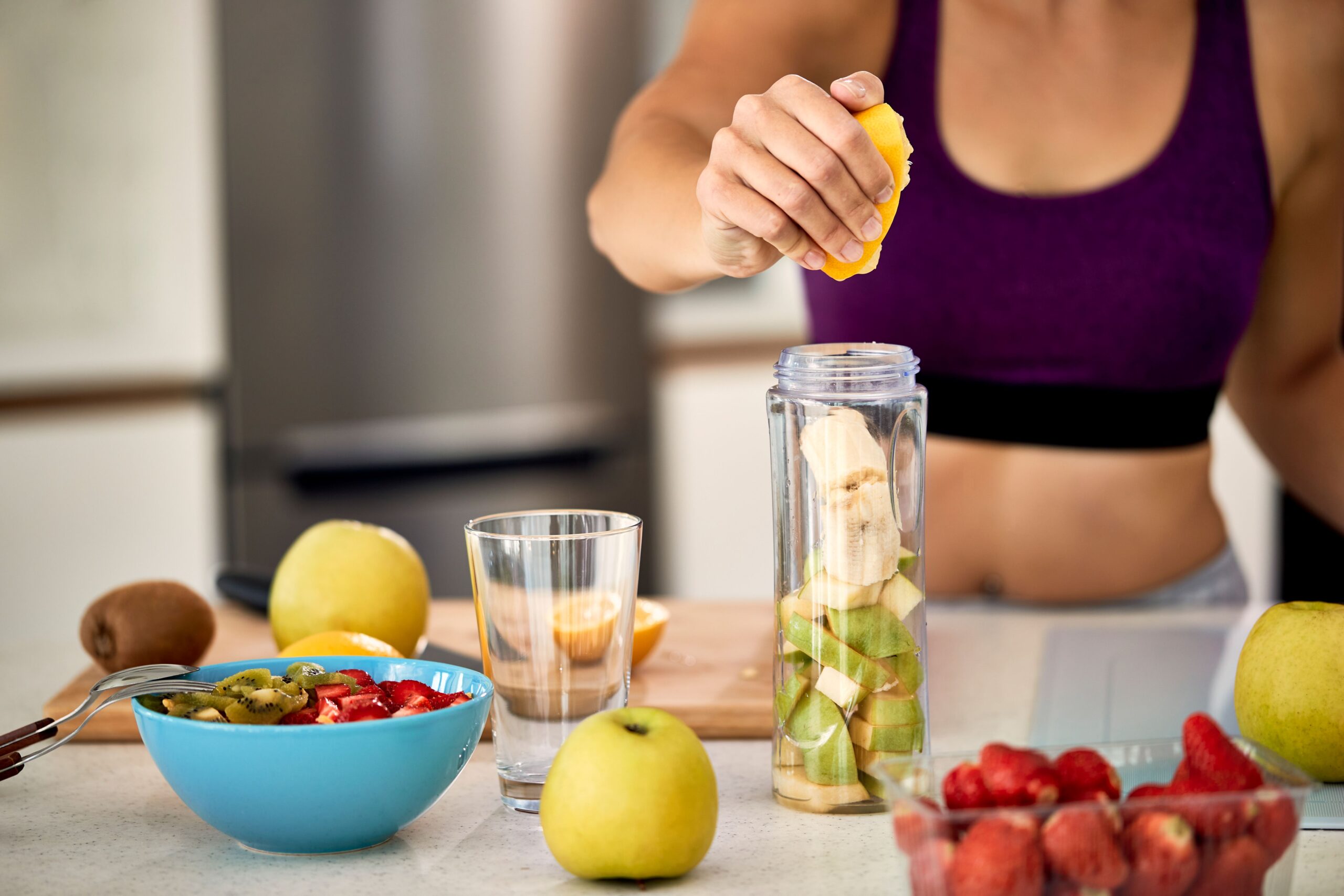
or even flavored with citrus fruits! (if you add the peel, make sure it is organic)
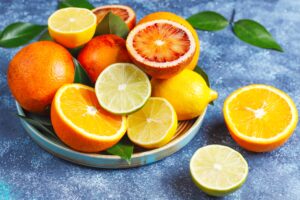
Citrus fruits (lemon water in the morning) stimulate the cleansing processes,
In citrus fruits, D-limonene: in oranges, lemons, limes, indirectly supports detoxification through enzyme induction (e.g. activation of Nrf2 and partially detox enzymes) and a slight increase in bile production.
Liver-protecting spices:
Just a few examples:
Parsley: binds mercury, so it’s a good pairing with fish
Ginger: helps with bowel movements
Turmeric: supports the overall body’s order as an antioxidant.
Mint, Basil, Oregano: also support with an anti-inflammatory effect.
Garlic: rich in selenium and allicin, which activates the liver’s cleansing enzymes.
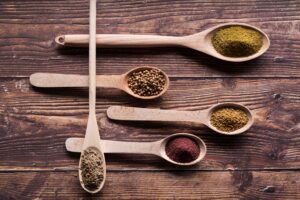
It’s worth adding plenty of spices!
Liver-regenerating herbs (as tea):
Milk thistle is the best-known liver protector, which helps regenerate damaged tissues. In addition, nettle and peppermint are also excellent additions to your weekly routine.
Green tea, ginger tea, dandelion tea… all support the body’s continuous detoxification with daily/weekly consumption!
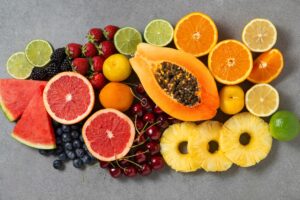
Fruits that are generally treated with fewer pesticides:
Avocado, pineapple, broccoli, watermelon, sweet potatoes, green peas, mushrooms, onions..
Of which it’s worth buying organic:
Apples, strawberries, cherries, celery, green peppers, tomatoes, grapes, green beans, blueberries…
It is important to mention cereals
Many people believe that it is worth avoiding gluten, but regardless of this, rice, millet, oatmeal, sorghum, buckwheat can be consumed properly.
The role of vitamins, minerals
In summary.. There are no “detoxifying vitamins”, but:
cofactors: glutathione: The main antioxidant and conjugating molecule of the cell, which directly binds reactive toxins and neutralizes oxidative stress.
NAC: increases glutathione synthesis, thus indirectly supporting detox and antioxidant protection.
antioxidants: They do not “take out” toxins, but reduce oxidative damage during phase I and stabilize the cellular environment.
methylation-supporting substances.
Key:
– B-complex: Cofactors in phase I and II enzyme reactions, as well as in the functioning of the methylation cycle.
– Vitamin C: A water-soluble antioxidant that regenerates glutathione and protects the cell from oxidative stress.
– Vitamin E: A fat-soluble antioxidant that prevents lipid peroxidation in cell membranes.
– Zinc: A cofactor for many enzymes, stabilizes proteins and supports the function of antioxidant systems.
– Selenium: An essential component of the enzyme glutathione peroxidase, making it key in neutralizing hydrogen peroxide and lipid peroxides
– Magnesium: A cofactor for hundreds of enzymes, including energy production and ATP-dependent processes required for detox reactions
Phase I Supporters:
B Vitamins, NAC, Glutathione, Berries, Leafy Greens, Turmeric, Garlic, Dandelion.
Phase II Supporters:
Glutathione, NAC, Amino Acid, Magnesium, Choline, Berries, Turmeric, Dandelion, Citrus Fruits, Onions, Leafy Greens, Milk Thistle.
You can replace all of these with dietary supplements available on the market today.
+ How to detoxify with our lifestyle?
Although diet is important, I must mention that it is not everything.
It is always the lifestyle that does the magic.
-
Avoid what you know is harmful.
-
Use water or air filters in your house if necessary
-
Do not buy food from questionable places. Reduce the consumption of foods cooked in a lot of fat, over-sugared, ultra-processed, ultra-fatty foods. Carbonated sugary drinks, alcohol as much as possible.
-
Move every day, even if it is just a half-hour walk! All this causes detoxification through the skin through the activity of blood circulation, lymph circulation, and sweating.
-
Get enough sleep, if you wake up not feeling rested, it is worth looking into what the problem could be and whether it can be treated :). Your glymphatic system actually cleans your brain while you sleep!
-
Use natural cleaning products.
-
Use glass, wood, etc. instead of plastic.
-
Emotional detoxification.. stress itself can be “toxic”.. overthinking, dissatisfaction.. you can find plenty of tools for this in psychological content:)

Resources
https://www.egeszsegkalauz.hu/betegsegek/epeko-epeholyag-tisztitokura/vxe47sh
https://pubmed.ncbi.nlm.nih.gov/21211072/#:~:text=Abstract,effective%20in%20removing%20gall%20stones.
/https://www.geneticlifehacks.com/liver-detox-genes/
https://lpi.oregonstate.edu/mic/dietary-factors/phytochemicals
https://examine.com/
https://www.khanacademy.org/science/biology
https://pmc.ncbi.nlm.nih.gov/articles/PMC7555273/
ScienceDirect: Anthocyanins and oxidative stress in hepatocytes
https://chlorophyllwater.com/pages/what-is-chlorophyll?srsltid=AfmBOoowkVAufcUJKPvxkU8mMoSOdWowWDYlYXRD72FU7-7rUFeltbV3
NIH/PubMed: Nrf2 signaling pathway and dietary polyphenols
Examine.com: Anthocyanins and Liver Health
https://pubmed.ncbi.nlm.nih.gov/26167297/
https://pubmed.ncbi.nlm.nih.gov/26543641/
https://pubmed.ncbi.nlm.nih.gov/19035553/
https://pubmed.ncbi.nlm.nih.gov/32414141/
https://pubmed.ncbi.nlm.nih.gov/29953331/
https://pubmed.ncbi.nlm.nih.gov/28608832/
https://comed.uobaghdad.edu.iq/wp-content/uploads/sites/4/uploads/Lectures/Biochemistry/biochemistry%202012-2013/dr.%20hadaf/4Detoxification%20in%20the%20Liver2012.pdf