
Herbs for mental well-being
For centuries, people didn’t have clinical terms for anxiety, mild depression, nervous exhaustion, or stress-related insomnia. They only knew the feeling: the weight behind the eyes, the racing thoughts before sleep, the sense that something inside was out of balance. And so they turned to what was available—not out of superstition, but out of careful observation. Leaves that calmed the breath. Roots that strengthened the weary. Flowers that softened a restless mind.
A cup of tea at dusk.
A tincture taken with intention.
A slow return to rhythm.
Modern science now gives names to what those early healers sensed intuitively. Neurotransmitters, stress hormones, inflammation, nervous system tone. We understand more—but the human experience hasn’t changed. The mind still tires. The body still holds stress. And sometimes, healing begins not with force, but with support.
The herbs you’ll read about below are not cures, nor replacements for medical care when it’s needed. They are tools—studied, measured, and respected—that can gently influence mood, sleep, resilience, and nervous system balance when used correctly.
This is where tradition meets evidence.
Where mystery meets method.
And where listening to the body becomes as important as treating it.
What follows is a practical, clinical guide to medicinal herbs that have long been used to support mental well-being—now viewed through the lens of modern understanding.
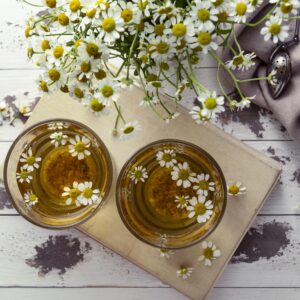
Chamomile (Matricaria recutita)
Used part:
Flowering tops
Chamomile is widely used for mild anxiety, stress-related tension, and sleep support. It also acts as a gentle digestive aid and antispasmodic, making it useful for functional gastrointestinal discomfort. Its anti-inflammatory flavonoids contribute to its calming effects.
Safety concerns:
Chamomile has an excellent safety profile.
Avoid use in individuals with known allergy to plants in the Asteraceae family (e.g., ragweed, daisy).
Use cautiously in patients taking anticoagulants due to potential additive effects.
Example dosage:
1–3 g dried flowers infused in 240 ml (8 oz) hot water, steeped for 10 minutes, up to 3–4 times daily.
Tip:
A chamomile tea in the evening is an easy, accessible way to support relaxation and digestion after meals.
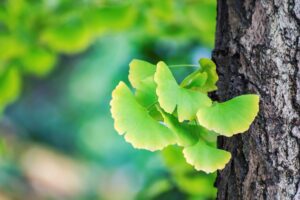
Ginkgo (Ginkgo biloba)
Used part:
Leaves
Ginkgo is primarily used to support cognitive function and may help with symptoms of dementia or depression in elderly patients by improving cerebral blood flow and exerting antioxidant effects.
Safety concerns:
Avoid in pregnancy.
Contraindicated in patients taking anticoagulants or aminoglycoside antibiotics.
May interact with antidiabetic drugs, antiepileptics, and calcium channel blockers.
Ginkgo seeds should not be consumed due to toxicity.
Example dosage:
Standardized extract containing 24% flavone glycosides and 6% terpenoids: 40–80 mg, three times daily.
Tip:
Ginkgo is best used as a standardized capsule rather than tea, as active compounds are not reliably extracted with home infusions.
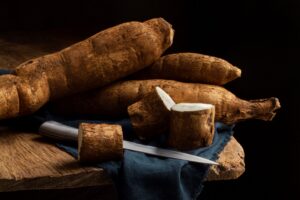
Ginseng (Panax ginseng)
Used part:
Root
Panax ginseng is used for fatigue, immune support, and reduced physical or mental performance. It is considered an adaptogen, enhancing stress resilience.
Safety concerns:
Avoid use during pregnancy.
Do not combine with anticoagulants.
May interact with antidepressants and hypoglycemic medications.
Product adulteration is common—use only reputable brands.
Example dosage:
500–1000 mg root powder twice daily
OR
100–200 mg standardized extract (4–7% ginsenosides) daily
Maximum duration: 12 weeks.
Tip:
Best taken in the morning or early afternoon to avoid sleep disturbance.
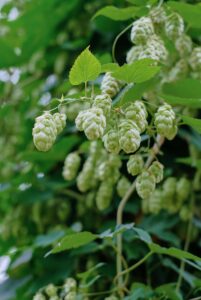
Hops (Humulus lupulus)
Used part:
Flowers (cones)
Hops are primarily used for insomnia and nervous restlessness due to their sedative properties.
Safety concerns:
Avoid in pregnancy and lactation.
Do not combine with other sedatives.
Avoid in women with a history of, or high risk for, estrogen-sensitive cancers.
Example dosage:
1 teaspoon dried flowers infused in 240 ml hot water for 5–7 minutes
OR
5:1 ethanolic extract, ½–1 dropper sublingually 30–60 minutes before bedtime.
Tip:
Hops tea is bitter; combining with lemon balm can improve taste and synergize calming effects.
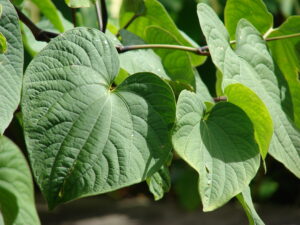
Kava (Piper methysticum)
Used part:
Root / rhizome
Good for Short-term treatment of anxiety (up to 3 months).
Also exhibits muscle-relaxing properties.
Safety concerns:
Risk of liver toxicity with high doses or prolonged use.
Contraindicated in liver disease, high alcohol intake, pregnancy, lactation, and childhood.
Avoid concurrent use with sedatives or hepatotoxic medications.
Liver enzymes should be monitored during use.
Example dosage:
50–70 mg kavalactones up to three times daily
Maximum: 210 mg kavalactones/day
Use aqueous extracts only (avoid ethanolic extracts).
Tip:
Kava is not suitable for casual daily use; it should be used purposefully and short-term under supervision.
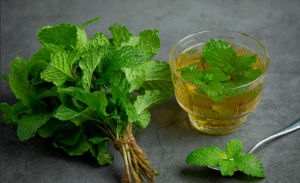
Lemon Balm (Melissa officinalis)
Used part:
Leaves
Clinical indications:
Useful for mild anxiety, nervous tension, and functional digestive complaints.
Also supports sleep and may ease stress-related palpitations.
Safety concerns:
Very safe and well tolerated.
Caution in patients with hypothyroidism if used long term.
Example dosage:
¼–1 teaspoon dried leaves infused in 240 ml hot water, 3–4 times daily
OR
300–500 mg dried leaf capsules, three times daily.
Tip:
An ideal daily tea for stress-prone individuals; gentle enough for regular use.
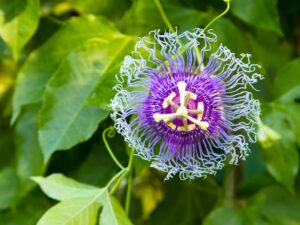
Passionflower (Passiflora incarnata)
Used part:
Dried leaves
Mild anxiety and nervo
us agitation.
Often used in combination formulas for insomnia or during withdrawal from sedatives.
Safety concerns:
Avoid use with monoamine oxidase inhibitors (MAOIs).
Do not combine with other sedatives.
Example dosage:
400–1000 mg dried leaves, twice daily.
Tip:
Useful as an evening tea when anxiety interferes with sleep.
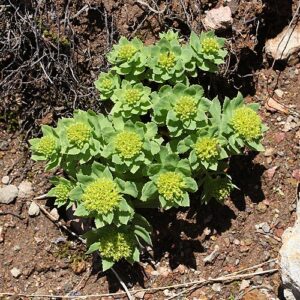
Rhodiola (Rhodiola rosea)
Used part:
Root
Used for mild depression, anxiety, and chronic fatigue.
Acts as an adaptogen supporting stress tolerance and mental performance.
“It stimulates you, without making you crash and burn,” says Gerbarg. The Russians found that it helped soldiers stay alert and energized during sleep-deprivation tests.
Safety concerns:
High doses may cause agitation, dizziness, or dry mouth.
Avoid use with MAOIs.
May increase irritability in sensitive individuals.
Example dosage:
Standardized extract (2–3% rosavins, 0.8–1% salidrosides):
100 mg/day for 1 week, increasing by 100 mg weekly as needed
Maximum: 400 mg/day.
Tip:
Take in the morning; avoid evening use due to stimulating effects.
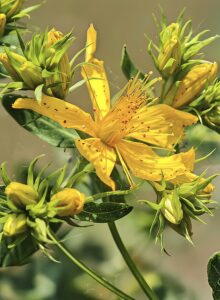
St. John’s Wort (Hypericum perforatum)
Used part:
Leaves and flowers
It was used in the medieval times to cure mood swings.
Since then research showed how it can elevate the serotonin level, which helps with depression.
It is used in mild-moderate depression to ease the mental symptoms
Safety concerns:
Causes numerous clinically significant drug interactions, including with oral contraceptives, anticoagulants, statins, antidepressants, immunosuppressants, and antiretrovirals.
Induces photosensitivity.
Avoid in patients on multiple medications.
Example dosage:
Standardized extract containing 2–5% hyperforin or 0.3% hypericin:
300 mg three times daily.
Tip:
Not suitable for self-prescribing—requires careful medication review.
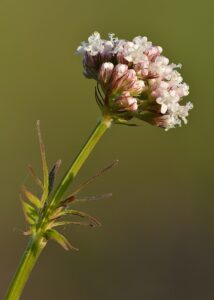
Valerian (Valeriana officinalis)
Used part:
Root
Low-dose daytime use for anxiety; higher evening doses for sleep support.
Requires consistent use for several weeks for full effect.
Safety concerns:
Avoid in pregnancy, lactation, and children under 3 years.
Do not combine with other sedatives.
Example dosage:
Standardized extract (0.1% valerenic acid):
300–600 mg in the evening.
Tip:
Valerian tea has a strong odor; capsules are often better tolerated.
Botanical therapies are not intended to replace conventional medical care and should be viewed as complementary approaches only. Information about use and dosage is provided for general educational purposes and reflects typical adult use in otherwise healthy individuals. Discussion of specific dosing should remain within one’s professional scope of practice. Individual needs, health conditions, and medication use may require different considerations. Always consult a qualified healthcare provider before starting any botanical or supplement to ensure it is safe and appropriate for you.
Useful resources
https://www.nationalgeographic.com/culture/article/long-before-doping-scandals–russians-were-studying-performance-
https://pubmed.ncbi.nlm.nih.gov/19593179/
https://pubmed.ncbi.nlm.nih.gov/27912875/
https://pubmed.ncbi.nlm.nih.gov/20236541/
https://pubmed.ncbi.nlm.nih.gov/16930364/
https://pubmed.ncbi.nlm.nih.gov/8879982/
https://pubmed.ncbi.nlm.nih.gov/23853057/
https://pubmed.ncbi.nlm.nih.gov/16335333/
https://pubmed.ncbi.nlm.nih.gov/17486686/
https://pubmed.ncbi.nlm.nih.gov/12535473/
https://pubmed.ncbi.nlm.nih.gov/23635869/
https://pubmed.ncbi.nlm.nih.gov/30396607/
https://pubmed.ncbi.nlm.nih.gov/12810768/
https://pubmed.ncbi.nlm.nih.gov/30591886/
https://pubmed.ncbi.nlm.nih.gov/11679027/
https://pubmed.ncbi.nlm.nih.gov/11679026/
https://pubmed.ncbi.nlm.nih.gov/17990195/
https://pubmed.ncbi.nlm.nih.gov/25610752/
https://pubmed.ncbi.nlm.nih.gov/18843608/
https://pubmed.ncbi.nlm.nih.gov/27589952/
https://pubmed.ncbi.nlm.nih.gov/16428030/
https://pubmed.ncbi.nlm.nih.gov/17517355/
https://pubmed.ncbi.nlm.nih.gov/20347389/